
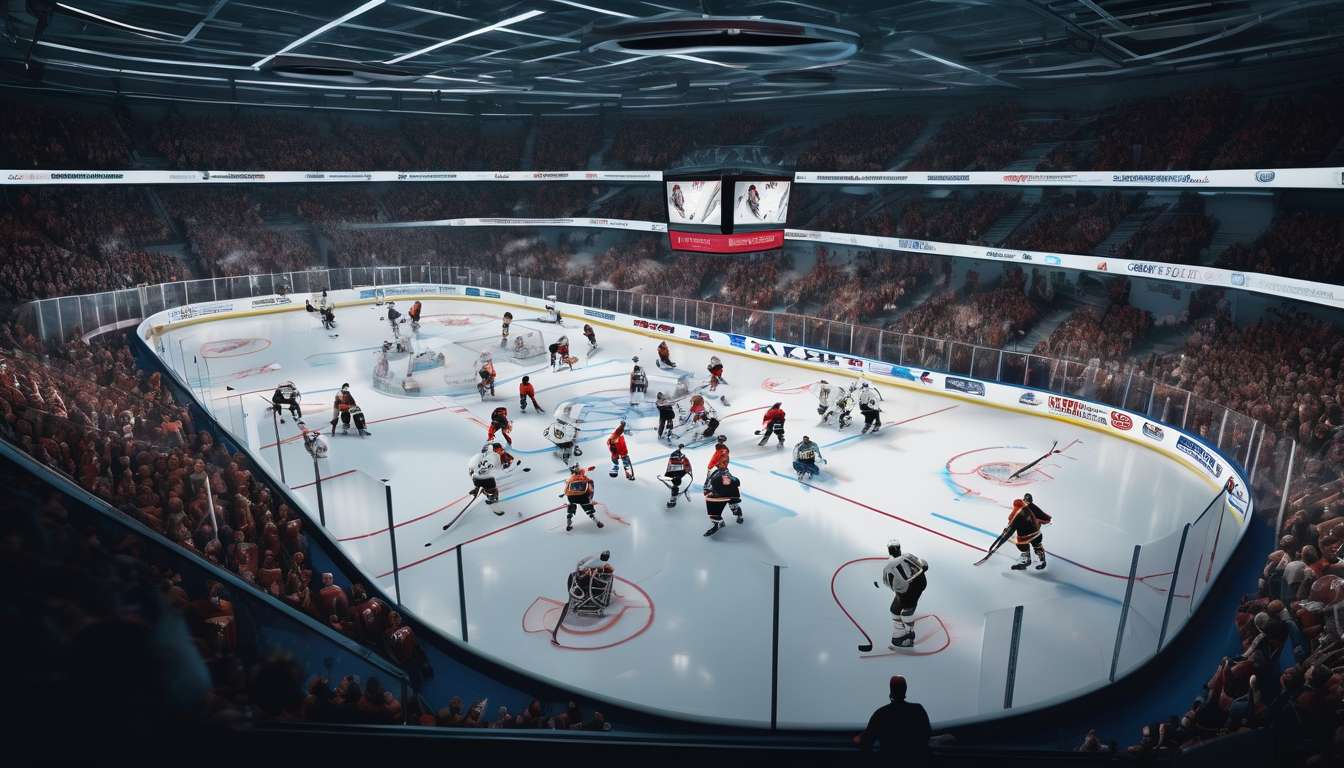
In the fast-paced world of ice hockey, we are constantly captivated by the intricate dance of players on the ice, where every shift and line change can tip the scales between victory and defeat. As fans and analysts, we are intrigued by the strategic orchestration behind NHL lines.
Understanding the impact of these lines on game strategies is not just about appreciating the artistry of the sport. It also involves uncovering the meticulous planning that fuels team dynamics.
Together, we delve into the nuances of line combinations, exploring how coaches craft these units to:
- Enhance performance
- Exploit weaknesses
- Adapt to the ever-changing tempo of the game
By examining the interplay of:
- Skill sets
- Player chemistry
- Tactical adjustments
We aim to unravel the complexities that define each line’s contribution to the team’s overall strategy.
Let us embark on this journey to deepen our appreciation of the strategic underpinnings of the NHL.
Line Combinations: The Building Blocks
Line combinations are crucial in shaping a hockey team’s strategy and maximizing player strengths. As fans, we’re all part of the excitement when our favorite NHL lines hit the ice, each bringing a unique blend of skill and chemistry.
We understand that a well-crafted line can be the difference between a win or loss. By aligning players with complementary skills, coaches create opportunities for:
- Seamless passes
- Smart defensive plays
- Exhilarating goal-scoring synergy
When we talk about NHL lines, it’s more than just who plays with whom. It’s about building a connected unit where each player knows their role and trusts their teammates.
We feel the anticipation as these lines develop throughout the season, adapting to new challenges and opponents. We share in the highs and lows, celebrating victories together and analyzing what went wrong when things don’t go our way.
Together, we witness how these line combinations transform individual talents into a cohesive force on the ice.
Strategic Orchestration: Coaches’ Playbook
Coaches orchestrate game strategies with meticulous planning, ensuring every player understands their role in executing the team’s vision on the ice. Our collective success hinges on the intricate dance of NHL lines, where each shift is a chance to capitalize on strengths and exploit opponents’ weaknesses.
Aligning the right players not only maximizes individual talent but creates a harmonious unit capable of seamless execution.
In this dynamic environment, we adjust on the fly, knowing flexibility is key. Our bench becomes a chessboard, each line change a calculated move designed to keep the opposition guessing.
We aren’t just sending players out; we’re deploying strategic assets, each line with its own set of tactics and responsibilities. This nuanced orchestration fosters a sense of unity and purpose within the team, reminding us all that we’re part of something larger.
Together, through carefully crafted NHL lines, we strive to achieve victory, one strategic play at a time.
Performance Optimization: Skill Matching
Matching Players’ Skills to Game Situations
Optimizing performance and enhancing our competitive edge involves strategically constructing NHL lines to create synergy among players. This synergy heightens our team’s effectiveness on the ice.
Balancing Team Dynamics
Each line needs a balance of:
- Speed
- Strength
- Skill
These elements must be tailored to match the demands of different phases of play. Whether it’s a power play or penalty kill, aligning our players’ strengths with these scenarios is crucial.
Fostering a Cohesive Team Environment
Belonging to a cohesive team means recognizing and valuing each player’s unique abilities. Assigning roles that play to our members’ strengths fosters an environment where everyone feels integral to our success.
Harmonizing Individual Talent
It’s not just about individual talent, but how we harmonize as a unit. Continually assessing and adjusting our NHL lines based on performance ensures we remain adaptive and competitive.
Building a Thriving Community
By doing so, we cultivate not just a team, but a community where everyone thrives.
Weakness Exploitation: Tactical Maneuvers
Exploiting Opponents’ Weaknesses
Exploiting our opponents’ weaknesses requires us to implement tactical maneuvers that capitalize on their vulnerabilities and disrupt their game plan. By studying the NHL lines, we can identify patterns and tendencies that reveal weaknesses ripe for exploitation.
Team Unity and Strategy Execution
Our team’s unity and shared insights allow us to execute these strategies seamlessly, making each of us feel like an integral part of a larger whole. We strategically position our players to exploit mismatched NHL lines, targeting less experienced or slower opponents. This coordination not only highlights our strengths but also fosters a sense of camaraderie as we work together to seize advantage.
Communication and Role Awareness
- We communicate constantly, ensuring everyone knows their role and the collective goal.
Controlling the Game’s Pace
By staying attentive to our opponents’ shifts and weaknesses, we can control the game’s pace and force them into uncomfortable situations. Our tactical maneuvers, rooted in understanding NHL lines, empower us to disrupt their rhythm, making our shared objectives feel achievable and our team stronger.
Dynamic Adaptation: Tempo Response
We constantly adjust our tempo to respond effectively to the shifting dynamics of the game and maintain our competitive edge. NHL lines are more than just a strategic arrangement; they’re a living, breathing part of our team’s identity.
Key strategies include:
- Thriving by reading the flow of the game
- Adapting speed and style to match or dictate play
- Speeding up to catch opponents off guard
- Slowing down to control the puck
Our ability to modify our tempo is crucial.
Seamless transitions between lines can change the course of a game in the fast-paced world of NHL hockey. Our quick decision-making and fluid line changes ensure that we’re always one step ahead.
We rely on:
- Collective effort
- Shared understanding
- Keeping the energy high
- Responsive tempo
This adaptability fosters a sense of unity, as we collectively embody the spirit of our team, always ready to face whatever the game throws our way.
Player Chemistry: The X-Factor
A strong sense of player chemistry on the ice can transform our team’s performance, turning potential into consistent success. When we watch our favored NHL lines in action, it’s clear that seamless coordination and trust between players ignite magic on the rink.
This chemistry isn’t just about individual skills but how well each player complements the others, creating a cohesive unit that opponents struggle to break. We see that when players instinctively know where their teammates will be, it results in:
- Split-second passes
- Strategic positioning
- Goal-scoring opportunities
These moments of synergy foster a sense of unity among us fans, as we cheer for a team that truly plays as one.
Effective NHL lines are not merely about combining star players but about crafting a lineup that:
- Maximizes each player’s strengths
- Covers potential weaknesses
Our team’s success hinges on this intangible X-factor, where chemistry becomes the secret weapon that elevates our game.
Tactical Adjustments: In-Game Evolution
In every game, we need to adapt our tactics on the fly to counter our opponents’ strategies and capitalize on their weaknesses. It’s a shared journey, one where we, as a team, lean into our collective strengths.
The dynamic nature of NHL lines means we’re always poised for change. Whether it’s a quick adjustment to line combinations or a shift in our defensive posture, we trust each other to stay connected and focused.
We’ve all seen how a well-timed line change can shift a game’s momentum. When our opponents throw something unexpected at us, we respond with agility, ensuring every player knows their role.
Our coaches:
- Read the ice
- Make decisions that reflect our unity and determination
By doing so, we maintain an edge, turning potential threats into opportunities. Together, we navigate the ice, embracing every challenge, and through tactical adjustments, our NHL lines are more than just strategy—they’re our bond.
Team Strategy Impact: Line Contributions
NHL Lines and Team Strategy
Each line contributes uniquely to our team’s overall strategy, enhancing our ability to control the game and exploit our opponents’ weaknesses. NHL lines are more than just player groupings; they’re the backbone of how we orchestrate our gameplay.
Line Contributions:
-
First Line:
- Sets the tone with energy and offensive prowess.
- Helps us seize early advantages.
-
Second Line:
- Often a blend of grit and skill.
- Ensures we maintain pressure on the opposition.
-
Third Line:
- Focuses on defensive stability.
- Neutralizes threats and keeps the game balanced.
-
Fourth Line:
- Relies on physicality and relentless forechecking.
- Wears down opponents, creating opportunities for our top scorers.
Synergy and Team Dynamics:
Each line’s contribution is essential, and the synergy between them can shift the momentum in our favor. Understanding the intricacies of NHL lines allows us to feel connected, knowing that every player’s role is vital to our collective success, fostering a sense of belonging within our team community.
How do off-ice factors, like player personalities and team culture, influence line effectiveness in the NHL?
Player Personalities and Team Culture in the NHL
These off-ice factors are crucial in determining line effectiveness. Understanding how each player’s unique traits and the overall team dynamics mesh together can greatly impact how well a line performs on the ice.
Optimizing Line Combinations
By fostering a positive environment and aligning player strengths with strategic placements, teams can:
- Optimize their line combinations for success.
- Enhance overall team performance.
- Create a cohesive unit that works well together during games.
Key Considerations
- Develop a positive team culture.
- Understand individual player personalities.
- Strategically place players based on their strengths.
By prioritizing these elements, teams can significantly improve their chances of success in the game.
What role does data analytics play in the decision-making process for NHL line formations?
Data analytics significantly shapes our NHL line formations.
We rely on stats and performance metrics to make informed decisions. By analyzing player data, we can optimize line combinations for maximum efficiency and success on the ice.
This analytical approach enhances our strategic planning and helps us adapt to opponents’ strengths and weaknesses.
In essence, data analytics is a crucial tool that guides our decision-making process when it comes to forming NHL lines.
How do injuries to key players impact the long-term strategy of line combinations in the NHL?
Injuries and Strategy Adjustments
When key players get injured, it significantly impacts our long-term strategy for line combinations in the NHL. We must quickly adjust and find new ways to fill those gaps.
Immediate Actions:
- Rethink Game Plan: Injuries force us to rethink our game plan and make decisions on the fly.
- Fill Gaps: Identify suitable replacements who can step into the roles left vacant by injured players.
Opportunities Arising from Injuries:
- Player Development: Injuries provide opportunities for other players to step up and demonstrate their capabilities.
- Discover New Talent: This situation can reveal hidden talents and potential within the team, offering a chance for lesser-known players to shine.
Conclusion
While injuries are challenging, they also open doors for strategic innovation and player growth, ultimately contributing to the team’s resilience and adaptability.
Conclusion
In conclusion, understanding how NHL lines influence game strategies is crucial for coaches and players to optimize performance, exploit weaknesses, and adapt dynamically.
By focusing on:
- Line combinations
- Strategic orchestration
- Player chemistry
teams can make tactical adjustments and evolve their game plan in real-time.
The impact of well-structured lines goes beyond individual skill, shaping the overall team strategy and contributing significantly to on-ice success.